
When I was pursuing my Masters degree in education back in the 90s, we spent time figuring out how to best set up a classroom. Traditional rows were out. Pods of four were in. But there were many other options too: the circle, the horseshoe, desks on the perimeter of the room.
Teachers were thinking about what would suit their teaching style and foster the best learning.
- Would your classroom be set up for group collaboration?
- Would your classroom be traditional, with students in rows, ready to consume information and work on projects individually?
- Would you have a horseshoe designed for group discussion?
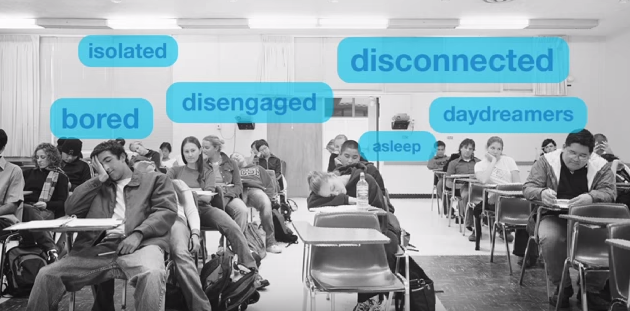
Traditional classroom furniture setup.
|
||
 |
||
 |
 |
 |
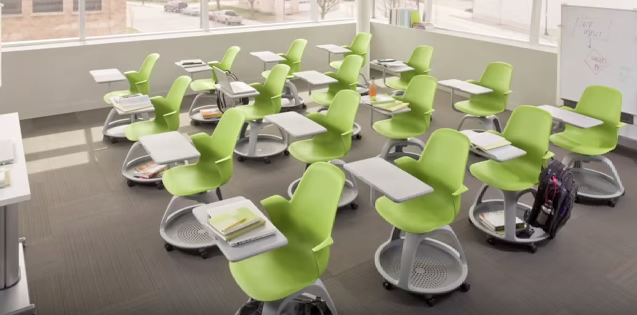
Traditional set up, untraditional seats with under storage for bags and attached, moveable desktops that accommodates all sitting styles, sizes, left or right handed.
|
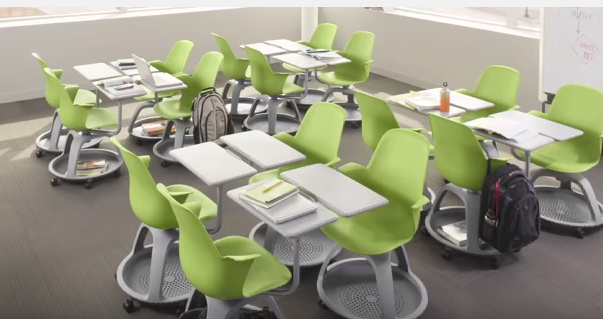
Two chairs turn to make collaborative group work in an instant.
|
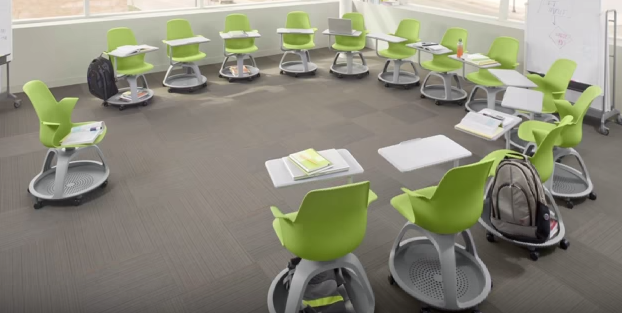
Two chairs turn again, and the class is ready for horseshoe seating discussion.
|
Companies like Steelcase make mobile furniture that instantly transforms to the configuration that is right for the moment. I had the opportunity to visit the showroom. I discovered flexible furniture models with names like “Node” because all pieces are connection points and “Verb,” an action word, because today’s furniture is tasked with being appropriate for an active learning.
As the pictures and animations show, this furniture is made for classrooms that rethink “the box” and move away from the traditional setting of rows of fixed tablet chairs and a lectern. These learning spaces easily morph from lecture mode to teamwork to group presentation, discussion and back again. Every seat is the best seat, with access to content, other students and instructors who are available to everyone.
Technology is integrated, providing democratic access for all. These are classrooms that engage and inspire by putting control of the learning space in the hands of students and instructors. There is an intentional emphasis on the the freedom to move and engage. Students are no longer stuck, frozen in rows or collaborative groups. There is also an understanding that there are times when privacy and one’s own space is important. Award-winning teacher John Taylor Gatto, who was critical of the American model of school, would have appreciated this small step toward honoring learners.
While Steelcase makes it easier to configure and reconfigure learning spaces, Steelcase’s professional learning leader, Marisa Sergnese pointed out that the furniture alone isn’t as important as having a teacher who understands the possibilities and effective use of learning spaces. Without that, a teacher can have new furniture or even new technologies and still teach in old ways. Interactive whiteboards can be used to hold chart paper, just like verb furniture may never see any action.
The most important thing to consider when setting up your classroom is thinking about what you are inviting learners to do?
 |
Deeper learning might require a stimulating environment at times, a quiet place at others, or an environment in between these extremes. Access to varied learning spaces within one floorplan supports the active learning process for all students. This also supports students’ sense of ownership.
Steelcase provides this framework to think about the four configurations for today’s mobile classroom.
- PRIVATE/ALONE Individual focused work with visual and acoustical accommodations. Despite an increase in collaborative work, individual study is still necessary for learning. These spaces, such as study enclaves and small breakout rooms, provide privacy without distraction for maximum productivity. This might be for the student who is doing research or reading.
- PUBLIC/ALONE Individual work in the presence of others. Steelcase observational research repeatedly shows students studying alone together, such as at open tables in libraries and hallways. These spaces are used when social connections are important but individual study is required, for both quick touchdowns or lengthy stays. This could be for students who are doing assignments on their own, but at times may want to speak with others about what they are working on.
- PRIVATE/TOGETHER Group work with visual and acoustical accommodations. These spaces support team collaboration and study when visual or acoustic privacy is important. These spaces should accommodate a range of group sizes and learning modes, use vertical planes to display information, and allow users to easily share digital content.
- PUBLIC/TOGETHER Open group work with peers or faculty and staff. These spaces support impromptu brainstorming and sharing of information among group members while allowing opportunities for mentoring and learning among faculty and students. Spaces should support different group sizes and postures. Mid-range warm hues should be used in these spaces. When space, furniture and technology easily adapt to pedagogies and learning preferences while supporting the rhythm of learning, campus planners and designers can make a significant contribution to the educational process.
Regardless of the furniture you have, innovative educators must always consider how to give students the ability to determine how and where they learn best. This means a smart and intentional use of space, not just in the classroom, but also, perhaps in non-traditional spaces such as hallways. Yes hallways. Interested in that, read this about my learning in the halls and this from how my best friend learned in our high school halls, and this eye-opening piece about learning spaces from Chris Lehmann.
While high-end furniture is a nice-to-have, it’s not a need-to-have. As a new teacher in Harlem in the 90s I begged for donations, scoured Craigslist, and brought in volunteers and students to work on creating a comfortable and cozy environment that gave my students a variety of learning environment options. Offering students a range of settings and the choice and control enables them to select the best environment for their learning needs and a sense of ownership over their learning. What do you think? How have or might you use your space to best meet the needs of your students?

