School Leadership 2.0
A Network Connecting School Leaders From Around The Globe
Nonprofit will pay gang members who want to go to college and get off the street
College Instead of Crime
Boston-area non-profit will pay gang members who want to go to college and get off the street, with a goal of improving communities.
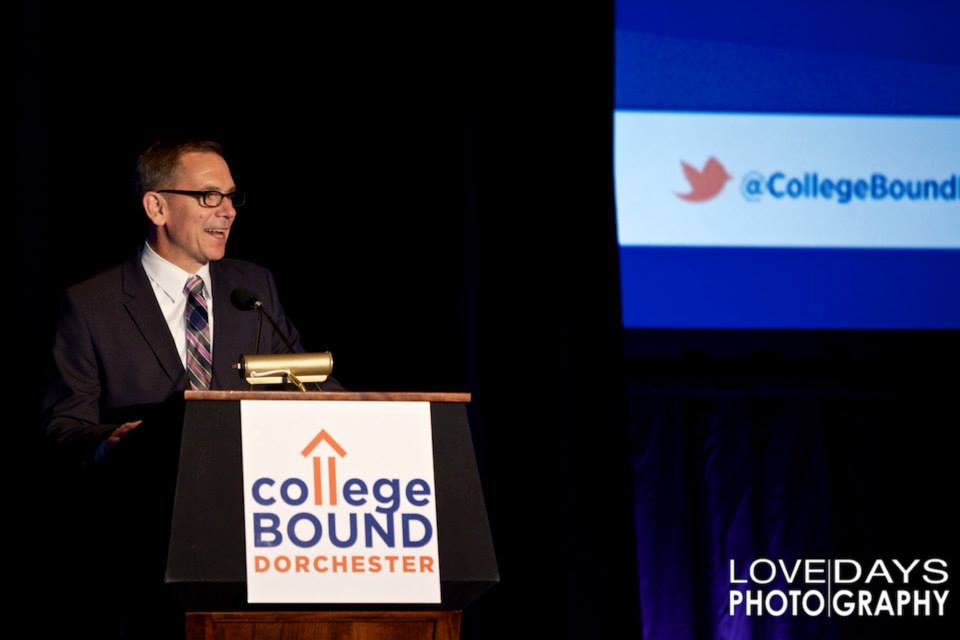
If college is a key to improving one’s life, one Boston-based nonprofit organization is hoping it’s a key to improving an entire community.
College Bound Dorchester, an organization that works with at-risk youth to encourage them to pursue college, on Thursday announced a new program called Boston Uncornered, which will pay active gang members to go to community college.
“It’s really college that is the key to transforming these guys’ individual lives, and when you transform individual lives you have the potential to unlock communities that have been trapped in poverty and violence for far too long,” said Mark Culliton, chief executive officer of College Bound Dorchester. “By going to the least likely [people] to succeed and committing to them, you have this outsize impact on the community and open up a college-going culture.”
The Boston Uncornered program works off the theory that gang members are “core influencers” in neighborhoods that are the most affected by gang violence. College Bound Dorchester works with former gang members who can go into those communities to recruit active gang members they’re familiar with and encourage them to leave behind that lifestyle to pursue college. The connections could create a domino effect, to the point where whole gangs no longer exist because the members have pursued college and careers, Culliton said.
According to the organization, Boston has about 2,600 gang members. Boston Uncornered hires former gang members to work as mentors, recruiters and college-readiness advisers. Most of the young people they approach range in age from 17 to 23.
“Not all of them, but a majority of these guys want to get out of the gang, and they have a voice in their head that says, ‘I can do other things and I’m better than this,’” Culliton said. “That life is terrible. It’s scary. It’s dangerous and it’s not economically viable, but they need the opportunity to do that, so we believe in providing financial support to these guys as they go through our program.”
Boston Uncornered plans to recruit 600 core influencers and will pay them $400 a week to achieve their high school diploma equivalency, if they don’t already have it, and to go to college. While the program brings in some undocumented students who can’t receive federal financial assistance, the majority would be eligible to receive Pell Grants. The stipend is expected to help the students attend college full-time and to keep them from making money illegally or at minimum-wage jobs. Over three years the program is expected to cost $18 million. So far Boston Uncornered has raised about $4.8 million in donations.
Encouraging people in prison or who were formerly incarcerated to pursue college isn’t new. Last year, under the Obama administration, the U.S. Education Department started a pilot program that offers Pell Grants to incarcerated students. And for the last few years, states and colleges have debated whether or not to include questions about criminal convictions or incarceration on college applications. Two of the two-year institutions College Bound Dorchester partners with -- Bunker Hill and Roxbury Community Colleges -- don’t ask students about their criminal history. A pilot version of the program, which included about 30 students, found that participants were 14 percent less likely to continue participating in criminal activities.
Some critics worry about the safety of college campuses when convicted students or students who have been involved in gang activity are enrolled.
“It’s not uncommon for a community college to have someone with a prior arrest record or be ordered by the courts to attend school in lieu of stronger sentencing,” said Valerie Roberson, president of Roxbury Community College. “We don’t necessarily know that unless a student self-reveals it.”
Roberson said these students are often no different from others who may face financial challenges or who struggle with completing college. They receive the same support other at-risk students receive, she said.
“When people are given an opportunity for a second chance, it’s our obligation to provide that second chance as a society,” Roberson said. “There are going to be some people who don’t feel safe, but Roxbury is relatively safe, especially in contrast to people’s perceptions of Roxbury, Dorchester and this part of Boston.”
Culliton said the program recognizes that some students will make mistakes, drop out or continue participating in illegal activities, but in most cases they’re willing to re-accept them into the program.
Roberson said students respect the campus and are attending the institution to escape any past criminal activities.
“Plenty of our students have all kinds of backgrounds -- criminal or otherwise -- and that’s not really relevant to the work we do with them,” said Nuri Chandler-Smith, dean of academic support and college pathway programs at Bunker Hill Community College. “We’re trying to assist them to move on to the next stage of their life or career, and we shouldn’t hinder them for what they’ve done in the past.”
JOIN SL 2.0
SUBSCRIBE TO
SCHOOL LEADERSHIP 2.0
Feedspot named School Leadership 2.0 one of the "Top 25 Educational Leadership Blogs"
"School Leadership 2.0 is the premier virtual learning community for school leaders from around the globe."
---------------------------
Our community is a subscription-based paid service ($19.95/year or only $1.99 per month for a trial membership) that will provide school leaders with outstanding resources. Learn more about membership to this service by clicking one of our links below.
Click HERE to subscribe as an individual.
Click HERE to learn about group membership (i.e., association, leadership teams)
__________________
CREATE AN EMPLOYER PROFILE AND GET JOB ALERTS AT
SCHOOLLEADERSHIPJOBS.COM
New Partnership
Mentors.net - a Professional Development Resource
Mentors.net was founded in 1995 as a professional development resource for school administrators leading new teacher induction programs. It soon evolved into a destination where both new and student teachers could reflect on their teaching experiences. Now, nearly thirty years later, Mentors.net has taken on a new direction—serving as a platform for beginning teachers, preservice educators, and
other professionals to share their insights and experiences from the early years of teaching, with a focus on integrating artificial intelligence. We invite you to contribute by sharing your experiences in the form of a journal article, story, reflection, or timely tips, especially on how you incorporate AI into your teaching
practice. Submissions may range from a 500-word personal reflection to a 2,000-word article with formal citations. Click here to explore and contribute an article.
Also, consider the exciting learning opportunity offered through the Mentors.net AI Academy.
© 2026 Created by William Brennan and Michael Keany
Powered by

