

Though our lesson plans will be on vacation until mid-August, election news will continue to dominate the headlines all summer long.
Here are a few ways students can keep up with the candidates, campaigns, conventions and controversies — and make their own opinions heard.
1. Keep Track of the Twists and Turns
- Visit “What to Know About the Presidential Race Today” to find a handy summary every morning.
- Or, sign up to get the free First Draft email of political news and analysis every Monday to Friday.
2. React to What You Read
— Post your thoughts on any Times article, Op-Ed, image, video or graphic any week from June 17 to Aug. 26 to enter our Summer Reading Contest.
— Speak back to media with projects suggested by our partners atLetters to the Next President, from making political art to creating infographics. Post your creations to Twitter, Instagram or Facebook with the hashtag #2NextPrez.
— Join conversations on social media using relevant hashtags, like #Election2016, #ImWithHer, #Trump2016 , #feeltheBern, #GOPconvention, #DemConvention, etc.
— Take photos around a political issue you care about, or that illustrate the democratic process itself. This compilation of Times images from the 2016 primaries proves that it’s not necessary to have a candidate in the shot to compose an eloquent image.
— Create an editorial cartoon, like these that won our contest last fall.
— Retell a political news story in just six well-chosen words.
3. Figure Out Where You Stand

What party best expresses your beliefs? These quizzes can help you figure that out:
Which candidate do you support? Though the quizzes below were created when the field was much larger, answering their questions can still help you think through where you stand on key issues:
- iSideWith: 2016 Presidential Election
- USA Today: Candidate Match Game
- CNN: Candidate Matchmaker
- Project Vote Smart: VoteEasy
4. Adopt an Issue
 http://www.nytimes.com/2016/04/20/science/2016-global-warming-recor...">Related Article</a>" name="100000004461673"/>
Climate change? Education? Immigration? Choose something you care about, and read, watch and collect pieces related to it from different news sources and points of view.
To get out of your “filter bubble” and help surface information fromsources that will challenge your thinking, make sure to seek out information from a variety of political points of view, and fromaround the world.
For inspiration, here are some short student videos about issues. You might also answer our Student Opinion question, What Issues in the 2016 Presidential Race Are Most Important to You?
5. Watch the Conventions
 http://www.nytimes.com/2015/09/29/us/politics/survey-of-republican-..."> Related Article</a>" name="100000004461653"/>
“Recent political conventions have grown so scripted and choreographed that moments of true spontaneity are rare. This year, when history seems to be providing little guiding precedent, could be the one that shatters the calm,” writes Jeremy W. Peters in his “Five Ways the Republican Convention Could Still Be Contentious.”
Both parties hold their conventions this July, the Republicans in Cleveland from the 18th to the 21st, and the Democrats in Philadelphia July 25th to 28th.
Polls show that Republicans, especially, are concerned about the future of their party — but Bernie Sanders has vowed to take his campaign all the way to the convention, so Democrats, too, are facing big questions.
 http://www.nytimes.com/2016/05/20/us/politics/donald-trump-hillary-...">Related Article</a>" name="100000004461647"/>
Both parties approach the conventions “with significant unease and hurdles to overcome,” Times reporters write in Republicans Want Their Party to Unify Behind Donald Trump, Poll Shows:
Mr. Trump and Mrs. Clinton are widely disliked by voters, and both parties will need to repair schisms that might spell doom in an ordinary election year. But this, of course, is no ordinary year.
Mr. Trump’s and Mrs. Clinton’s soaring levels of unpopularity are extraordinary for the likely nominees of the two major parties. Nearly two-thirds of voters, for example, say that Mr. Trump is not honest and trustworthy. Just as many say the same of Mrs. Clinton. Strong majorities of voters say the candidates do not share their values.
What do you expect to happen? Why? That leads us to our next idea …
6. Predict the Unpredictable
 http://www.nytimes.com/2016/05/05/upshot/what-i-got-wrong-about-don...">Related Article</a>" name="100000004459903"/>
In one of the most unpredictable election seasons in modern memory, Donald Trump is Exhibit A.
The Upshot explains why we’re so bad at predicting rare events:
Anyone can simply be unlucky. But there are systematic biases and errors our puny human brains tend to make repeatedly when we try to predict the future, some of which are evident in the biggest political and sports upsets of 2016.
Make five to 10 predictions about what you think will happen before Election 2016 is over, and post or save them somewhere — perhaps challenging your friends or classmates to do the same. Then, follow the news to see how close you come, and to analyze what you got right and wrong.
Before you do, however, you might want to read The Upshot’s Nate Cohn on “What I Got Wrong About Donald Trump.”
7. Get to Know the Candidates
Your first step: the candidates’ own websites:
Hillary Clinton
Bernie Sanders
Donald J. Trump
Your second: the Times candidate pages for each:
Hillary Clinton
Bernie Sanders
Donald J. Trump
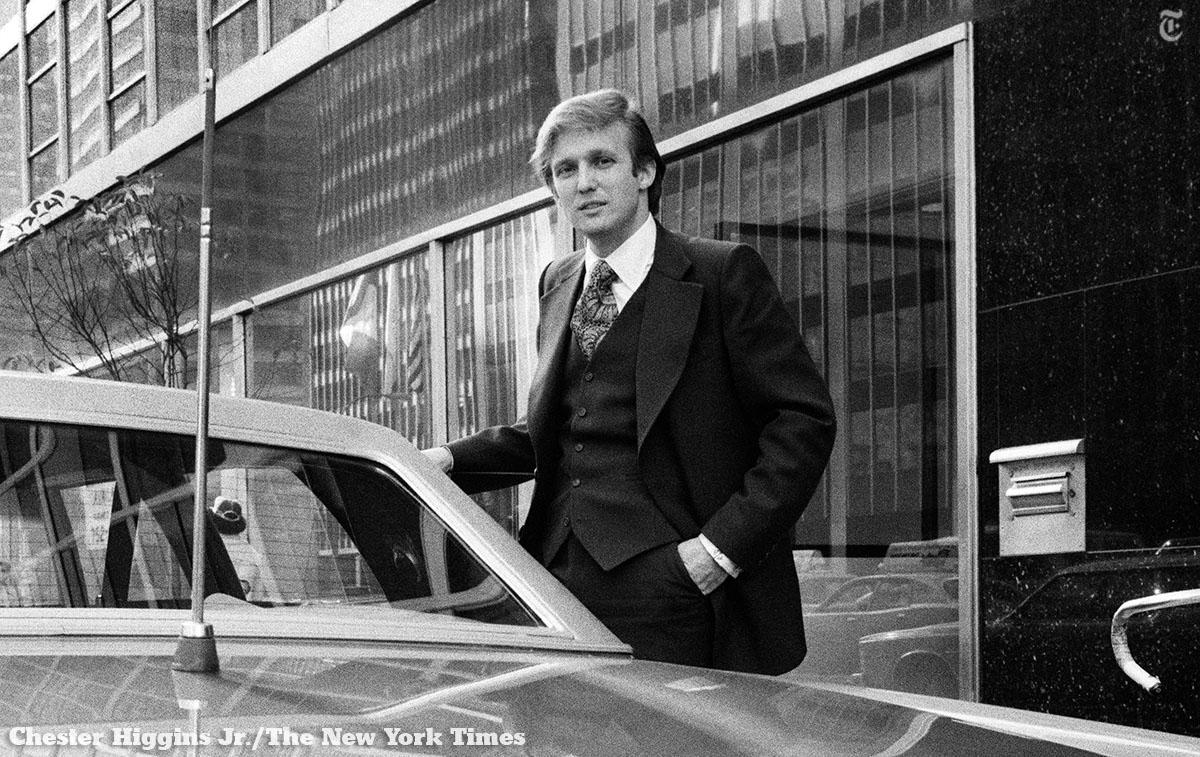
And, because they have all been in the public eye for decades, Timessearch and archives can also help:
 http://timesmachine.nytimes.com/timesmachine/1981/03/08/032946.html...">Related 1981 Article</a>" name="100000004462272"/>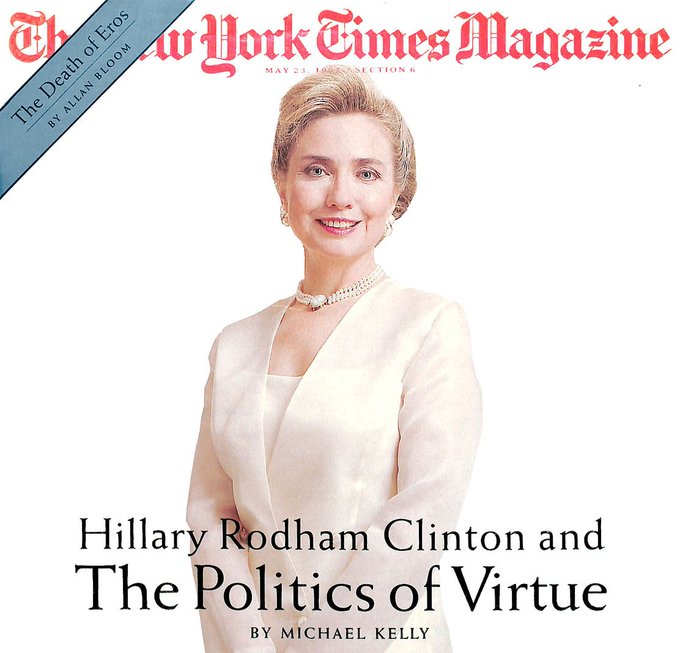

For a comprehensive look at their statements on the issues, check out ProCon or use the resources in our lesson plan on the topic.
For many more specifics about each, see our list at the bottom of this post under “Ask the Big Questions.”
8. Monitor the Messaging

What are the candidates and campaigns saying? How much of it is true? What platforms and mediums are they using? What messages have worked? What missteps have they made?
You can keep track of presidential advertising via this page and see Times analysis of both the candidates’ own advertising, and theattack ads aimed at them. As you watch, you can use our TV commercial analysis chart.
You can fact-check the candidate’s statements — and suggest your own ideas for fact checks — with this Times interactive.
But you can also keep abreast of the far more unpredictable messaging you can find on social media. Eighteen-year-oldJiachen Jiang, one of our spring Student Council members, explains:
Social media, in all its myraid forms, has proven that it influences far more of the population than technology-obsessed millennials. However, it is undoubtedly a double-edged sword, easily turned against even the most tech-savvy candidates.
From Trump and Clinton’s hapless “Hispandering” to Sanders’ increasing loss of control over vitriolic “Bernie bros,” candidates are finding that not all publicity is good publicity.
Over the course of the summer, Ms. Jiang suggests analyzing the social media output of the candidates and answering the following questions, supporting your responses with specific tweets and posts:
- How are the candidates using social media? On which platforms are they most successful? Why do you think that is?
- How are their followers using it to support them? Their detractors to undermine them?
- What strategies do the candidates use to connect with followers?
- Find several examples of successful social media posts. Analyze them – what makes them different from the candidate’s other posts? What does this say about the candidate’s supporters?
- How do social media posts change over the months? What is different about the strategies needed for success in the primary elections in comparison with the general election?
9. Volunteer
 http://www.nytimes.com/politics/first-draft/2016/01/19/bernie-sande...">Related Article</a>" name="100000004462335"/>
This list, from Youth Service America suggests all the following and many more, and provides links to explain how:
- Conduct voter registration drives.
- Educate voters by developing voter guides.
- Host a convention or debate watch.
- Organize Get-Out-The-Vote activities.
- Become a citizen journalist and make your voice heard during the election.
- Volunteer for campaigns.
- And, of course, if you’ll be eligible, register to vote.
10. Ask the Big Questions
On the Trail: The Week of April 3
 Go to previous slideGo to next slide
Caroline Cruz, daughter of Senator Ted Cruz of, looked out from behind the stage before her father addressed a crowd in Green Bay, Wis., on Sunday.
CreditHilary Swift for The New York TimesBelow, a starter list of questions posed in Times sections like Room for Debate, The Upshot and elsewhere.
Election 2016, Democracy, Voters and the Electoral Process
- Is there too much democracy in America, or too little?
- Is tyranny around the corner? Are Americans tired of democracy’s fa...
- Why is 2016 different from all other recent elections?
- Would voters be better off with more choices? Is the two-party syst...
- Do college students’ votes really matter in an election?
- Should everybody vote?
- Does polling undermine democracy?
- Does money really matter in politics?
- Which states should vote first in the primaries?
- What format changes would make the presidential debates more substa...
- When should voters take a presidential candidate seriously?
- Is it a good thing that campaigns are long, expensive and chaotic?
- How should party leaders rein in their renegades?
- How do delegate rules explain political parties?
- Why has trust in the news media declined?
- When was America greatest?
Hillary Clinton, Bernie Sanders and the Democratic Party
- Clinton’s email habits: careless or criminal?
- Should the former first lady, now Democratic presidential candidate...
- Has Sanders not been taken seriously enough?
- Should Bernie Sanders call it quits?
- Can Bernie Sanders make a legacy?
- What would happen if the Democrats changed how a nominee is selected?
Donald J. Trump and the Republican Party
- How can Donald Trump, man of such extreme views, be the G.O.P. cand...
- How much help from the G.O.P. does Trump need?
- Should Trump be allowed to kick protesters out of his rallies?
- Is Trump ‘Presidential’? Is Anyone?
- Are you concerned about the Republican Party’s future?
- What effect could the Republicans’ stance on the Supreme Court vaca...
- Were there too many G.O.P. candidates?
What big questions would you ask? How could you find answers?

