
When I first began my career as an educator back in the 90s, I believed the problem with schools was that they were boring and the work was irrelevant. Those are indeed big problems, but what I later realized is we need to do more than make schools relevant and exciting. We must provide environments where students can engage in innovative, real-world experiences they find meaningful. When you do that you move toward becoming an innovative educator.
Wonder if you’re an innovative educator? Consider this question:
"Do you inspire your students to implement and share their ideas and/or work in the real world or communicate their ideas to someone outside the classroom who can help those ideas or work come to life?"
If you can answer yes to that question, then you’re on the right track.
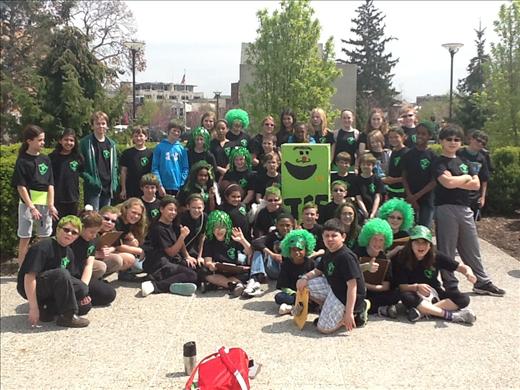 |
| Students take their work to the streets and hold businesses accountable for sustainable practices. Read how below. |
Interesting and relevant just brings us part way there. Innovative and real leads to meaningful learning. Let’s take a look at some examples:
Is This Innovation?
|
|
Yes - Innovative / Real
|
Not Quite - Interesting / Relevant
|
Second grade students discover tourism is suffering in their town. They explore all the wonderful things in their community and make an interactive multimedia presentation that they Tweet out to a targeted audience and have featured on the tourism bureau’s Facebook Page and website to help attract tourists to their city.
|
Second grade students discover tourism is suffering in their town. They explore all the wonderful things in their community and make guides celebrating their city which they turn in to their teacher for a grade and display on the hallway bulletin board.
Why not: Potential tourists never saw student work.
|
Fifth grade students read “Island of the Blue Dolphins” and reenact scenes that they capture on video and share on an “Island of the Blue Dolphins” channel they created on YouTube that serves as a guide for those studying the book.
|
Student read “Island of the Blue Dolphins” and reenact scenes that they capture on video and show during a film festival in their class. Read more here.
Why not: The work remained trapped in the classroom rather than shared with others in the world who would be interested.
|
Students across grade levels meet with their school district to discuss guidelines for using social media responsibly. They determine their peers would prefer receiving this information as infographics in secondary school and as an activity guide in primary grades. The students work with the teachers to create materials following the guidelines that are shared on the district website for all the students in the district. These guidelines are also shared with districts and students across the globe.
|
Students discuss internet safety and create videos. Their product is handed in for a grade.
Why not: Students learned about internet safety but did not communicate their solutions to others who needed this information.
|
Fifth grade students tackle the issue of sustainability. Their strategy to improve sustainability in the community is to educate and encourage businesses in the community to be a part of the solution. To do that students learned what businesses could do to be sustainable and created brochures that included concrete advice. Students presented and distributed the brochures to businesses. To hold businesses accountable, students created an honor roll of businesses following those practices that was published on the town website in printed in public places and they provided badges of sustainability to those who met their criteria.
|
Students study sustainability and write letters addressed to the town council about improving sustainability. The teacher lets students who receive the best grade present their letters at the school assembly.
Why not: The letters did not reach the right audience to make an impact in the area they were addressing.
|
What the innovative educators in the left column of the above examples were guided by (whether or not they realized it) was Innovative Teaching and Learning Research which is part of the 21st Century Learning Design which has rubrics (which you can find here) to reflect on areas such as collaboration, skilled communication, real-world problem-solving and innovation.
Are you engaging in innovative practices like those mentioned above? If so, please share more in the comments. If not, how could you bring the work you are doing with students from relevant and interesting to real and innovative?

