"Never give in!" Winston Churchill famously roared to schoolboys at his alma mater.
Persistence may have helped the Allies win World War II, but psychologists suggest that wouldn't have been much use on the SAT.
A study published in the Journal of Research in Personality threatens to put a damper on America's grit mania, with research that suggests that knowing when to throw in the towel is just as important as the willingness to put up a fight.
"Right now, there’s an effort to push everyone to be more gritty," lead researcher Gale Lucas told USC News, but "it’s important to know when to quit and reevaluate rather than blindly push through."
America's love of gritty determination is championed by researchers like Angela Duckworth, a professor at the University of Pennsylvania and the country's grit guru, who has found that hard work and resilience predict success "over and beyond measures of talent."
Her pro-grit findings were popularized in best-sellers like "How Children Succeed: Grit, Curiosity, and the Hidden Power of Character," in which journalist Paul Tough which argued that kids need what economists call "noncognitive" skills, like curiosity and honesty, as much as they need any book learning.
But beware too much of a good thing, say researchers from the University of Southern California and Northeastern University.
They asked college students to assess their own grittiness – their resilience in the face of obstacles – before taking a series of tests: word, math, and computer games that, unbeknownst to the test-takers, were rigged against them.
On the verbal and math tasks, participants were financially rewarded for each correct answer: a real-life incentive to race through and find as many doable questions as possible, skipping those that seemed too daunting – much like the SAT. (Unlike the SAT, however, some of the experiment's questions were actually impossible.)
Yet people who gave themselves high grit ratings tended to take their time, seemingly determined to crack even the hardest questions rather than move on to the easy money.
Noble? Maybe. But it didn't help them in the short-term: most grit-sters solved fewer problems.
Grit is important, emphasized Professor Lucas, but smart grit – knowing when to change course – is the really crucial ingredient.
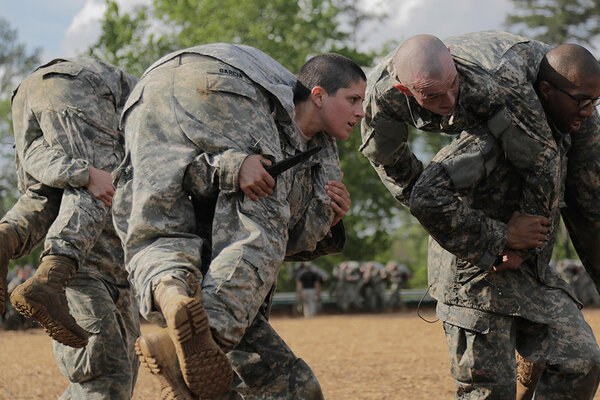
It's a lesson for educators, students taking high-stakes tests, and a very different demographic: soldiers.
If anyone is known to disdain "quitting," it's the armed forces. But Lucas thinks soldiers should learn not just how to dig in, but how to switch tracks when a strategy isn't working. The military must hope so, too: some of the funding for her study came from the Air Force and the Army.
Although the science is new, the hunch that dogged persistence has its limits has been around for quite a while.
As comedian W. C. Fields, Mr. Churchill's contemporary, is rumored to have said: "If at first you don't succeed, try, try again. Then quit. There's no use being a blamed fool about it."


You need to be a member of School Leadership 2.0 to add comments!
Join School Leadership 2.0