School Leadership 2.0
A Network Connecting School Leaders From Around The Globe
Tell Me So I Can Hear You: A Developmental Approach to Feedback for Educators
Tell Me So I Can Hear You: A Developmental Approach to Feedback for Educators
reviewed by Susan K. Brondyk — July 18, 2016
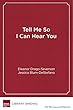 Title: Tell Me So I Can Hear You: A Developmental Approach to Feedback for Educators
Author(s): Eleanor Drago-Severson and Jessica Blum-DeStefano
Publisher: Harvard Education Press, Cambridge
ISBN: 1612508820, Pages: 215, Year: 2016
Search for book at Amazon.com
With the national spotlight on teacher quality, leaders are under pressure to provide teachers with meaningful support that fosters growth and improves student achievement. Feedback is considered a critical element of this process, but often fails to improve practice in any significant way whether it is formal, informal, top-down, or lateral. Eleanor Drago-Severson and Jessica Blum-DeStefano’s book Tell Me So I Can Hear You: A Developmental Approach to Feedback for Educators suggests there is a disconnect between the receiver and the giver of the feedback. Based on years of research with educational leaders around the world, the authors provide a new approach to improving feedback that will help others grow.
After examining the literature to identify both the challenges associated with giving feedback (e.g., the limitations of the person delivering the feedback, overcoming the culture of nice, etc.) and strategies that work well (e.g., feedback should be specific, focused, non-judgmental, and timely; it should be delivered compassionately within the confines of a trusting relationship but should also be constructive; there should be follow up and opportunities for recipients to respond and reflect), the authors extend the field by defining feedback as a “developmentally oriented exchange of ideas that honors adults’ qualitatively different ways of knowing, and that seems to build internal and organizational capacity, which helps to improve performance” (p. 18). Moving beyond offering suggestions and expert advice, this approach requires people to work in new ways and helps leaders become more intentional in adopting a developmental perspective that allows them to adjust and differentiate their feedback.
Foundational to Drago-Severson and Blum-DeStefano’s approach are assumptions based on Robert Kegan’s constructive-developmental theory, which are laid out in the first three chapters of the book. One assumption is that people have different ways of knowing or sense-making systems that influence how they give and receive feedback. The authors analogize these to audio frequencies that impact the way people tune in or tune out.
There are four ways of knowing commonly found in adulthood. The first isinstrumental: people with this way of knowing tend to be more concrete, less reflective, and are driven by their immediate needs and desires. They follow the rules, see things in black and white, and value support that is tangible and action-oriented. The second way is socializing: this way of knowing is more complex in that people are able to reflect, think abstractly, and make generalizations. Relationships and especially the expectations and opinions of others are of the utmost importance and these people often subordinate their own opinions and needs in order to adopt the views of others.
The third way is self-authoring: people are able to identify and most often driven by their own values and ideologies. They prefer to appear competent, achieve their goals, and have a strong sense of right and wrong that they use to assess feedback. However, this strong internal benchmark sometimes makes it difficult for them to take in drastically different perspectives. Finally, the fourth is self-transforming and the number of people with this way of knowing is relatively small in comparison. They have the ability to see their own meaning-making systems, are less invested in their own personal identities, and are more open to the views and beliefs of others. They are able to analyze a situation from multiple perspectives and can even see the overlap of ideas. While each of these stages is helpful in its own way, the authors believe there is a developmental progression through which adults pass at their own rate: “Each new way of knowing reflects a significant expansion of a person’s internal, developmental capacities and reflects an increased capacity to stand back and reflect on oneself and one’s work” (p. 7).
Another related idea is that feedback must be developmentally oriented. Drago-Severson and Blum-DeStefano’s approach recognizes that adults with different ways of knowing need alternative kinds of supports and challenges in order to fully hear, understand, and implement feedback that will lead to growth. Giving the type of feedback that results in change requires leaders to meet their receivers where they are, gently push them toward change, and remain at their side as they develop. This is accomplished by means of an intentionally tailored and balanced series of supports and challenges. This type of developmental lens not only helps leaders understand more about themselves but also allows them to determine the receiver’s way of knowing so that they can offer feedback in a way that will be heard and internalized. Chapters Four and Five detail how people with each of these ways of knowing prefer to give and receive feedback and provide helpful charts with examples of supports and challenges for each stage.
Another major assumption deals with capacity: leaders’ internal capacities to offer feedback are just as important as the messages they deliver. Giving the type of feedback that promotes growth entails more than sharing expertise or helping the receiver learn knowledge and skills. It also requires certain internal capabilities that allow the giver to communicate ideas in ways others can understand and use to improve their practice. For most people, these internal capacities need to be cultivated, which involves learning to identify the developmental perspectives of both the giver and the receiver and then altering the supports and challenges over time as both participants grow and change in their ability to give and take feedback.
The first half of the book provides the theoretical underpinnings for the authors’ new approach to feedback and the latter chapters offer practical advice for successfully implementing feedback for growth. For example, Chapter Six discusses the preconditions necessary for creating a culture where feedback can be offered and received within the confines of a safe and trusting relationship or “holding environment” (p. 52). The authors suggest six strategies for achieving these types of “growing conversations” (p. 99) and one of my favorites is modeling vulnerability and being open to feedback. Based on the premise that actions speak louder than words, Drago-Severson and Blum-DeStefano believe that leaders can go a long way toward gaining trust by modeling an orientation toward growth and valuing feedback from others. Not only does this improve the leader’s own practice, but it also shows the receiver what it means to be vulnerable and open to the perspectives of others. It sends the message that everyone is growing and can improve their practice and that feedback is an important part of this process. The hope is that the receiver will feel less anxious and be more open to receiving feedback.
To begin implementing this new approach, Chapter Seven suggests that leaders consider: who (the ways of knowing of both the giver and receiver), what (the content of what needs to be said), and why (the purpose or goal) to give feedback. The authors then describe two types of feedback interaction that givers can use depending on the situation and needs of the receiver. Constructive feedback involves providing concrete directives or suggestions to help with immediate challenges the teacher might have while inquiry-oriented feedback is an open dialogue where both participants contribute to joint inquiry about a dilemma. The authors provide concrete examples of both types of feedback to help readers understand the potential mismatches that might undermine the effect of the feedback.
Chapter Eight analyzes when and where to offer feedback and in terms of timing the authors explain that it depends on both the receiver’s orientation and need for processing time. A helpful chart is provided that outlines when to wait and when to initiate feedback. The authors also emphasize the importance of being intentional about feedback choices including where to deliver it. They stress the dangers of public feedback and recommend planning and initiating private conversations and describe seven strategies for giving effective feedback in the moment privately. While many may seem commonsensical and predictable, like preparing carefully and really listening, the authors dig deep to offer concrete examples for each strategy to support adults with different ways of knowing.
Effective feedback should lead to some sort of action and Chapter Nine describes ways to follow through on prior conversations that maintain forward motion. Building on the idea of checking out (one of the strategies from the preceding chapter), the feedback giver can capitalize on the momentum from previous conversations depending on the situation and needs of the receiver. Emphasizing the need to find the right balance between support and challenge, feedback givers can check in emotionally with the receiver especially after a difficult conversation or when planning realistic and actionable next steps. The authors once again provide practical examples complete with a chart of supports and challenges.
Chapter Ten comes full circle by emphasizing the importance of leaders seeking feedback to bring their best selves to the critical work of developing teachers. Drago-Severson and Blum-DeStefano provide three strategies with corresponding examples from three different leaders with different ways of knowing to pursue feedback from others: informal surveys, mini-convenings, and hosting a dinner party.
Tell Me So I Can Hear You is a must read for anyone who gives feedback in their work, especially those charged with helping teachers improve their practice. Striking a perfect balance between theory and practice, this book provides both the why and the how of offering feedback for growth. Drago-Severson and Blum-DeStefano contribute to our thinking about this common practice, which is too often ineffectual, by offering a new conceptual understanding along with vignettes, tables, and application exercises that bring their approach to life. The book concludes by tying theory and practice together with an action plan intended to help readers analyze their own capacity for giving feedback for growth and create a personal plan to improve their ability to give and receive feedback.
| Cite This Article as: Teachers College Record, Date Published: July 18, 2016 http://www.tcrecord.org |
JOIN SL 2.0
SUBSCRIBE TO
SCHOOL LEADERSHIP 2.0
Feedspot named School Leadership 2.0 one of the "Top 25 Educational Leadership Blogs"
"School Leadership 2.0 is the premier virtual learning community for school leaders from around the globe."
---------------------------
Our community is a subscription-based paid service ($19.95/year or only $1.99 per month for a trial membership) that will provide school leaders with outstanding resources. Learn more about membership to this service by clicking one of our links below.
Click HERE to subscribe as an individual.
Click HERE to learn about group membership (i.e., association, leadership teams)
__________________
CREATE AN EMPLOYER PROFILE AND GET JOB ALERTS AT
SCHOOLLEADERSHIPJOBS.COM
New Partnership
Mentors.net - a Professional Development Resource
Mentors.net was founded in 1995 as a professional development resource for school administrators leading new teacher induction programs. It soon evolved into a destination where both new and student teachers could reflect on their teaching experiences. Now, nearly thirty years later, Mentors.net has taken on a new direction—serving as a platform for beginning teachers, preservice educators, and
other professionals to share their insights and experiences from the early years of teaching, with a focus on integrating artificial intelligence. We invite you to contribute by sharing your experiences in the form of a journal article, story, reflection, or timely tips, especially on how you incorporate AI into your teaching
practice. Submissions may range from a 500-word personal reflection to a 2,000-word article with formal citations. Click here to explore and contribute an article.
Also, consider the exciting learning opportunity offered through the Mentors.net AI Academy.
© 2026 Created by William Brennan and Michael Keany
Powered by

