School Leadership 2.0
A Network Connecting School Leaders From Around The Globe
Scalia's death likely to alter outcome in Friedrichs lawsuit By John Fensterwald
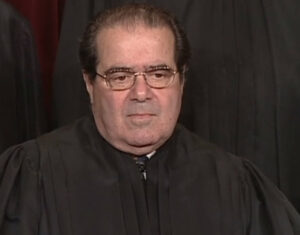
Antonin Scalia
The article was updated on Feb. 16 to include an analysis by SCOTUSblog publisher Tom Goldstein.
With the death of Supreme Court Justice Antonin Scalia, the California Teachers Association will likely gain an unexpected victory, at least for now, in its legal battle to continue the right to require all teachers to pay the costs of collective bargaining.
That was the issue raised in Friedrichs v. the State of California and the CTA, which the U.S. Supreme Court will rule on by June. Court observers had predicted that Scalia would join the four other conservative justices to make a 5-4 decision overturningAbood v. Detroit Board of Education, a four-decades old Supreme Court decision that said that states could require all public employees to split the expenses of bargaining, known as “agency” or “fair share” fees.
A majority decision agreeing with the plaintiffs – Rebecca Friedrichs, an elementary school teacher in the Savanna School District in Anaheim and nine other non-union teachers – could severely weaken the financial health and political clout of the CTA and other public employee unions. The suing teachers contend that mandatory fees coerce them to support bargaining positions they disagree with, violating their constitutional right to free speech.
RELATED

‘Friedrichs V. CTA’ – What You Need To Know About Challenge To Union Dues
With a possible 4-4 tie, the court would defer to the ruling of the U.S. 9th Circuit Court of Appeals on the side of the union. If that were to happen, the Court of Appeals decision would uphold only California’s law permitting mandatory fair-share fees and not affect the other two dozen states that also have passed similar statutes. (Tom Goldstein, publisher of SCOTUSblog, suggests that the Supreme Court could decide to have cases like Friedrichs reargued, once Scalia’s successor takes a seat on the court. Goldstein cites precedents for doing this in his article.) In the remaining “right-to-work” or open-shop states, in which all dues and fees are voluntary, unions generally are weaker and the percentage of membership is smaller.
In its pro-forma ruling in 2014, the Appeals Court didn’t consider the merits of the case, nor was it asked to. The Washington, D.C.-based Center for Individual Rights, which filed the lawsuit on behalf of the plaintiff teachers, had asked the lower courts to expedite a decision without a full trial so that the Supreme Court could directly reconsider the Abood decision.
The center’s lawyers had reason to believe the majority on the court would agree with them. In a ruling in 2014 in a related case, Harris v. Quinn, Scalia and other conservatives called the Abood decision “troubling.” Although the court didn’t overturn Abood then on technical grounds, Scalia and other conservatives in a concurring opinion invited a lawsuit directly challenging it. The Friedrichs lawsuit was that challenge, and the court agreed last fall to hear the case.
In establishing fair-share dues, the court in Abood distinguished between collective bargaining expenses, covering pay and working conditions, and money to underwrite a union’s support of candidates, its political positions and lobbying local school boards and the Legislature on non-bargaining issues. Teachers are not obligated to pay for politicking, it said.
For California teachers, about $600 of their average $1,000 annual union dues goes toward their fair-share fees; it is divided among their local union, the California Teachers Association and the National Education Association for their expertise and representation. Teachers who don’t want to join the union and pay the political portion of union dues must annually sign a statement of their intention to opt out.
In a 1991 decision, Scalia defended the right of public-employee unions to charge fair-share fees to cover collective bargaining expenses, since they are legally required to negotiate on behalf of union and non-union workers. Mandatory fees would solve the problem of “free-riders” who benefited from the contract without paying for negotiation expenses, Scalia reasoned.
But in oral arguments in Friedrichs last month (see page 45 of the transcript), Scalia indicated he had changed his mind and would join the other four conservative justices. “The problem is that everything that is collectively bargained with the government is within the political sphere, almost by definition,” including bargaining over pay increases, Scalia said, adopting the key argument of the plaintiffs.
The Center for Individual Rights’ strategy of expediting its lawsuit may have backfired with Scalia’s death. Whether the CTA and other public unions face another lawsuit like Friedrichs any time soon will depend on who becomes Scalia’s successor. President Obama would like to make that choice – and, with his third appointment to the court, tip control of the court to moderates and liberals. But Republican U.S. senators vowed Sunday not to vote on a nominee, leaving the choice to the next president.
The National Education Association and the American Federation of Teachers, the parent unions for the California Teachers Association and the California Federation of Teachers, a co-defendant in the Friedrichs case, last year endorsed Democrat Hillary Clinton for president. With the court’s ideological majority now in the balance, Scalia’s death has raised the stakes in November for unions and their opponents.
In a statement Sunday, Joshua Pechthalt, president of the California Federation of Teachers said that Scalia’s death “is likely to result in a delay of the Friedrichs case but it’s not certain and I think the public sector unions and the education unions have to continue the organizing we have been doing with the assumption nothing has changed.”
But he also agreed that the vacancy on the court “underscores the importance of this presidential race.” The next president could nominate one, maybe more Supreme Court judges, he said, adding, “These judges could be interpreting the constitution for the next generation, including issues related to labor, women’s rights, voting rights, affirmative action, the environment and social justice.”
JOIN SL 2.0
SUBSCRIBE TO
SCHOOL LEADERSHIP 2.0
Feedspot named School Leadership 2.0 one of the "Top 25 Educational Leadership Blogs"
"School Leadership 2.0 is the premier virtual learning community for school leaders from around the globe."
---------------------------
Our community is a subscription-based paid service ($19.95/year or only $1.99 per month for a trial membership) that will provide school leaders with outstanding resources. Learn more about membership to this service by clicking one of our links below.
Click HERE to subscribe as an individual.
Click HERE to learn about group membership (i.e., association, leadership teams)
__________________
CREATE AN EMPLOYER PROFILE AND GET JOB ALERTS AT
SCHOOLLEADERSHIPJOBS.COM
New Partnership
Mentors.net - a Professional Development Resource
Mentors.net was founded in 1995 as a professional development resource for school administrators leading new teacher induction programs. It soon evolved into a destination where both new and student teachers could reflect on their teaching experiences. Now, nearly thirty years later, Mentors.net has taken on a new direction—serving as a platform for beginning teachers, preservice educators, and
other professionals to share their insights and experiences from the early years of teaching, with a focus on integrating artificial intelligence. We invite you to contribute by sharing your experiences in the form of a journal article, story, reflection, or timely tips, especially on how you incorporate AI into your teaching
practice. Submissions may range from a 500-word personal reflection to a 2,000-word article with formal citations. Click here to explore and contribute an article.
Also, consider the exciting learning opportunity offered through the Mentors.net AI Academy.
© 2026 Created by William Brennan and Michael Keany
Powered by

