School Leadership 2.0
A Network Connecting School Leaders From Around The Globe
Making the Most of Your Online Professional Learning in the Digital Age
Making the Most of Your Online Professional Learning in the Digital...
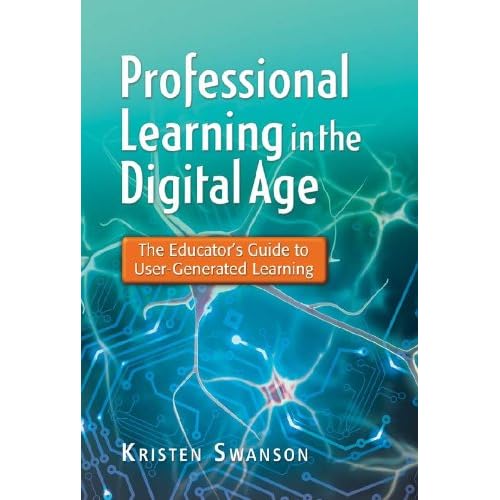
Swanson begins by defining what is meant by “user-generated learning” which she defines as “learning acquired through active curation, reflection, and collaboration to a self-selected collaborative space.” In other words, user-generated learning is a very deliberate process of carrying out three specific actions that can transform an educator into a connected one, and by default transform his or her educational practice. These three actions that bring about the kinds of learning fostered through online connections include:
- Curating: Process or action of carefully collecting relevant resources. In this case, these are resources entirely associated with our professional practice. There are online tools that aid in the process of curating the content and information on which learning is based.
- Reflecting: Process or action of making sense of this newly curated information and determining what it all means for professional practice. Reflecting is vital to assimilating our new learning. Tools such as blogging assist educators in reflection.
- Contributing: This is the final process of action of user-generated learning. It consists of giving back to the community of learners to which we are now connected. Contribution fosters connections.
Professional Learning in the Digital Age: The Educator’s Guide to User-Generated Learning, Eye on Education, is powerful-succinct guide for all educators to learn 21st century style.
JOIN SL 2.0
SUBSCRIBE TO
SCHOOL LEADERSHIP 2.0
Feedspot named School Leadership 2.0 one of the "Top 25 Educational Leadership Blogs"
"School Leadership 2.0 is the premier virtual learning community for school leaders from around the globe."
---------------------------
Our community is a subscription-based paid service ($19.95/year or only $1.99 per month for a trial membership) that will provide school leaders with outstanding resources. Learn more about membership to this service by clicking one of our links below.
Click HERE to subscribe as an individual.
Click HERE to learn about group membership (i.e., association, leadership teams)
__________________
CREATE AN EMPLOYER PROFILE AND GET JOB ALERTS AT
SCHOOLLEADERSHIPJOBS.COM
New Partnership
Mentors.net - a Professional Development Resource
Mentors.net was founded in 1995 as a professional development resource for school administrators leading new teacher induction programs. It soon evolved into a destination where both new and student teachers could reflect on their teaching experiences. Now, nearly thirty years later, Mentors.net has taken on a new direction—serving as a platform for beginning teachers, preservice educators, and
other professionals to share their insights and experiences from the early years of teaching, with a focus on integrating artificial intelligence. We invite you to contribute by sharing your experiences in the form of a journal article, story, reflection, or timely tips, especially on how you incorporate AI into your teaching
practice. Submissions may range from a 500-word personal reflection to a 2,000-word article with formal citations. Click here to explore and contribute an article.
Also, consider the exciting learning opportunity offered through the Mentors.net AI Academy.
© 2026 Created by William Brennan and Michael Keany
Powered by

