School Leadership 2.0
A Network Connecting School Leaders From Around The Globe
Einstein Fellows: Best Practices in STEM Education
http://astore.amazon.com/schooleade20-20/detail/1433121948Einstein Fellows: Best Practices in STEM Education
reviewed by Ying-Chih Chen — September 26, 2015
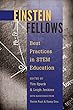 Title: Einstein Fellows: Best Practices in STEM Education
Author(s): Tim Spuck & Leigh Jenkins (Eds.)
Publisher: Peter Lang Publishing, New York
ISBN: 1433121948, Pages: 410, Year: 2014
Search for book at Amazon.com
Recent reform documents pertaining to K-12 science education have supported a connection and integration between science and other disciplines (technology, engineering, and mathematics) to better prepare our future workforce in STEM careers as well as to meet the current and future challenges of our modern society (e.g., Common Core State Standards, 2010; National Research Council [NRC], 2012; NGSS Lead States, 2013).
This reform movement has shifted science from a standalone subject toward becoming one that is interdisciplinary. This raises unprecedented challenges for teachers: What are the best approaches to meet the criteria described in reform documents? How do we create an effective curriculum, environment, and pedagogy to engage students in meaningful STEM learning? Einstein Fellows: Best Practices in STEM Education (2014), edited by Tim Spuck and Leigh Jenkins, unpacks the struggles that teachers face on a daily basis and provides solutions to addresses those problems. The essays inEinstein Fellows were written by fifteen in-service teachers who participated in the Albert Einstein Distinguished Educator Fellowship Program. Seven themes emerge from the sixteen chapters: interdisciplinary learning, underrepresented minorities, project-based learning, multiple modal representations, informal learning, game-based learning, and immersion professional development.
The first two chapters offer the most useful implementation of interdisciplinary learning that can bring students to a new awareness of the connections that exist among STEM disciplines (Jacobs, 1989). Chapter One addresses the interconnectedness between subjects and learning experiences. These connections can be “made from year to year (transfer), from course to course within a single year of study (scaffolding) and from the course out into the students’ world at large (application)” (Spuck & Jenkins, 2014, p. 9). Chapter Two emphasizes the meaningful connection between what students learn and their everyday lives. Chapters Three through Five attempt to uncover issues of underrepresented minority groups in STEM education. Females, African Americans, Hispanics, and students from low socioeconomic backgrounds are historically more likely to be deficient in STEM academic success and less likely to pursue STEM careers. Chapter Three suggests a differentiated strategy, called Girls Exploring Technology (GET), in which females take science, math, and technology classes together, but mix with males in the rest of their classes. The author contends that girls would be willing to engage in hands-on activities and discuss their ideas in this less threatening context.
Chapter Four focuses on methods to improve math learning for at-risk students. The author suggests that teachers should sequentially tailor the curriculum to fit what these students know and ideally will learn. Chapter Five provides a Student-centered Sheltered Instructional Approach and Growth (SSIAG) model in which students engage in project-based learning, assessment with open-ended questions, and parental involvement. The third theme in this book is project-based learning, a model in which students are collaboratively immersed in authentic science practices to collect data, generate claims, and evidence from data analysis, as well as socially construct their understanding “through negotiation among members of the community” (p. 122). Chapter Six suggests that project-based learning requires students to integrate different subject knowledge and apply it in applied settings. The importance of imagination is emphasized in Chapter Seven.
The collection’s fourth theme is multiple modal representations. Science is often abstract and explanatory (McDermott & Hand, 2013), and “there are rarely situations where a single representation, such as tabulated data, is effective for all tasks” (Yore & Treagust, 2006, p. 309). As the author suggests in Chapter Eleven, students should communicate science concepts to a public audience through multi-media representations. The author further suggests that students can build their STEM literacy by engaging with multi-media. Chapter Twelve proposes strategies for improving literacy, such as adopting the use of whiteboards in classrooms that the author argues creates a more student-centered environment. Students cannot only communicate their ideas verbally but also represent their claims visually through figures, drawings, diagrams, etc.
Chapters Thirteen through Sixteen examine the book’s fifth theme of informal learning. Chapter Thirteen suggests that field trips to museums, farms, national and state parks, theaters, as well as after-school programs can be resources to inspire students to pursue deeper learning in the STEM fields. Chapter Fourteen discusses an innovative concept of modeling sustainability through STEM service. Chapter Fifteen illustrates how outdoor ecological inquiry brings students and their natural surroundings together. Chapter Sixteen describes an interesting project integrating technology and national resources (e.g., National Aeronautic and Space Administration [NASA], and National Oceanographic and Atmospheric Administration [NOAA]) to foster students’ ability to learn earth science through the application of satellite imagery, remote sensing, and computer visualizations.
The sixth theme is immersion professional development (PD). Instead of one-shot PD, Chapters Eight and Nine both present how ongoing PD impacts content knowledge, educational practices, and teaching philosophy. In Chapter Eight, the author shares her experience attending a two-month immersion professional development. She teaches students how to think and act like scientists rather than asking them to recite scientific vocabulary and follow cookie-cutter labs. The author of Chapter Nine describes how she brought her six-summer-long PD experience into classrooms, establishing norms that engaged students in searching for evidence to support their claims.
The volume’s seventh and final theme is game-based learning, a new concept in the area of science education that needs substantial evidence to support its impact on student learning. Chapter Ten provides a creative idea to alternate classes like a game through the use of reward systems, mission fulfillment, and cooperative learning. According to the author, this kind of atmosphere not only motivates student interest in learning STEM content, but also enhances students’ self-efficacy.
Through a series of empirical stories and teachers’ reflections, this book leads us—chapter by chapter—down an enlightened path of continuous discoveries regarding innovative approaches for STEM learning and teaching. STEM education is a nationwide movement and that gives a renewed focus on science education. Einstein Fellows: Best Practices in STEM Education provides insight into what STEM practice actually looks like in classrooms. However, despite this positive outcome, readers should approach this book with a critical lens, being cautious of deficient perspectives embedded within its provocative arguments and untried new concepts emerging from the stories it provides.
References
Jacobs, H. H. (1989). Interdisciplinary curriculum: Design and implementation. Alexandria, VA: Association for Supervision and Curriculum Development.
McDermott, M., & Hand, B. (2013). The impact of embedding multiple modes of representation within writing tasks on high school students’ chemistry understanding. Instructional Science, 41(1), 217-246.
National Governors Association (NGA) Center for Best Practices & Council of Chief State School Officers (CCSSO) (2010). Common core state standards for English language arts & literacy in history/social studies, science, and technical subjects. Washington DC: NGA and CCSSO.
National Research Council (2012). A framework for K-12 science education: Practices, crosscutting concepts, and core ideas. Washington, DC: The National Academies Press.
NGSS Lead States (2013). Next generation science standards: For states, by states. Washington, DC: The National Academies Press.
Yore, L. D., & Treagust, D. F. (2006). Current realities and future possibilities: Language and science literacy-empowering research and informing instruction. International Journal of Science Education, 28(2-3), 291-314.
| Cite This Article as: Teachers College Record, Date Published: September 26, 2015 http://www.tcrecord.org ID Number: 18125, Date Accessed: 10/3/2015 10:00:21 AM |
JOIN SL 2.0
SUBSCRIBE TO
SCHOOL LEADERSHIP 2.0
Feedspot named School Leadership 2.0 one of the "Top 25 Educational Leadership Blogs"
"School Leadership 2.0 is the premier virtual learning community for school leaders from around the globe."
---------------------------
Our community is a subscription-based paid service ($19.95/year or only $1.99 per month for a trial membership) that will provide school leaders with outstanding resources. Learn more about membership to this service by clicking one of our links below.
Click HERE to subscribe as an individual.
Click HERE to learn about group membership (i.e., association, leadership teams)
__________________
CREATE AN EMPLOYER PROFILE AND GET JOB ALERTS AT
SCHOOLLEADERSHIPJOBS.COM
New Partnership
Mentors.net - a Professional Development Resource
Mentors.net was founded in 1995 as a professional development resource for school administrators leading new teacher induction programs. It soon evolved into a destination where both new and student teachers could reflect on their teaching experiences. Now, nearly thirty years later, Mentors.net has taken on a new direction—serving as a platform for beginning teachers, preservice educators, and
other professionals to share their insights and experiences from the early years of teaching, with a focus on integrating artificial intelligence. We invite you to contribute by sharing your experiences in the form of a journal article, story, reflection, or timely tips, especially on how you incorporate AI into your teaching
practice. Submissions may range from a 500-word personal reflection to a 2,000-word article with formal citations. Click here to explore and contribute an article.
Also, consider the exciting learning opportunity offered through the Mentors.net AI Academy.
© 2026 Created by William Brennan and Michael Keany
Powered by

