School Leadership 2.0
A Network Connecting School Leaders From Around The Globe
Book Review: The Challenges of Mandating School Uniforms in the Public Schools
The Challenges of Mandating School Uniforms in the Public Schools
reviewed by Catherine J. Ross — February 08, 2016
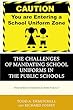 Title: The Challenges of Mandating School Uniforms in the Public Schools
Author(s): Todd A. DeMitchell, Richard Fossey
Publisher: Rowman & Littlefield, Lanham
ISBN: 1475809336, Pages: 166, Year: 2015
Search for book at Amazon.com
Todd A. DeMitchell and Richard Fossey’s The Challenges of Mandating School Uniforms in the Public Schools: Free Speech, Research, and Policy is a companion to a 2014 book by the same authors titled Student Dress Codes and the First Amendment: Legal Challenges and Policy Issues. Comparing uniform regimes that specify what students must wear runs throughout School Uniforms; dress codes impose standards and set the outer limits of student choice concerning apparel. A common theme unites both volumes: the potential conflict between students’ expressive rights and the atmosphere most conducive to learning.
The authors have long collaborated in writing at the intersection of education, law, and policy. DeMitchell is a former teacher, principal, school system superintendent, and a Distinguished Professor of Education at the University of New Hampshire. Fossey is a lawyer and an educator by training, has formerly represented school boards in Alaska, and is the Paul Burdin Professor of Education at the University of Louisiana at Lafayette.
DeMitchell and Fossey’s latest contribution reflects these backgrounds, and seeks to influence policy and offer practical advice to educators and school systems. The authors recognize that students have expressive rights, but believe it is more important to “maintain an orderly school environment and [defend] the boundaries of modesty, cleanliness, and civic behavior” (p. 130). DeMitchell and Fossey concede that there are serious aspects to clothing choices, which are linked to the “nascent development of self and place” (p. 1), but they generally devalue the importance of expression through self-presentation.
The first three chapters of School Uniforms set out potential legal challenges to regulations affecting student clothing choice, and the legal frameworks governing these controversies. The authors are on solid ground when they assert that schools do not receive enough guidance from courts that “have not ruled consistently” (p. 9).
Non-lawyers and lawyers alike may find much to ponder in the book’s accounts of legal cases, but readers should proceed with caution before relying on its account of the legal doctrine governing student constitutional rights.
The cases and what they represent are not always set out as clearly as they could be, and DeMitchell and Fossey largely avoid the difficult task of reconciling or analyzing inconsistencies among the decisions in this area, both real and apparent. After introducing the Supreme Court’s four seminal student speech cases, the authors discuss various student attire cases decided in the lower courts. They devote attention to restrictions on student clothing and symbol choice deemed to violate dress codes or other rules, including words on t-shirts and the like. This includes symbolic expression intending to convey a message that a bystander is likely to understand (e.g., a black armband), and litigation involving attire that courts found sent no message at all. The authors do not relate these cases to one another, thus magnifying the impression that the law governing what students wear is complex and fragmented. I would imagine that this would leave a school principal’s head spinning.
The law concerning mandatory uniforms is much simpler than the law governing regulations on clothing that students choose themselves. DeMitchell and Fossey perceptively point out that many courts do not apply the special doctrines that govern K–12 student speech to school uniforms because judges have concluded that wearing a uniform is not the type of expression protected by the First Amendment. Much of the discussion of student speech rights in the context of dress codes seems like a digression from the primary focus: mandatory uniforms.
I take issue with some of the characterization of the applicable legal doctrines, with the caveat that this might be more insider baseball than most readers of this book would seek. Nuances matter and educators are likely to exaggerate how far their powers extend without them. For example, when discussing Bethel v. Fraser (1986), a Supreme Court case that gives schools the discretion to ban lewd speech, DeMitchell and Fossey say the censorship power extends to all “offensive” speech (p. 27). However, offensive speech is a virtually limitless concept, which is no different than the desire to avoid controversy, which the Supreme Court has long held is not a constitutionally permissible reason to censor speech, even in schools (Tinker v. Des Moines, 1969; West Virginia v. Barnette, 1943).
Similarly, a subtitle references the imprimatur requirement in Hazelwood v. Kuhlmeier(1988), which allows school-sponsored expression (speech appearing to be the school’s own or to bear the school’s stamp of approval) to be censored for any legitimate pedagogical reason. But in the following discussion, the authors ignore the school-sponsorship requirement. They take at face value a decision allowing a school to bar religiously motivated student preaching against gay people, and suggest it correctly usedHazelwood’s deferential standard in a case clearly involving student speech, not school speech. The lack of analytic commentary could lead educators to draw erroneous conclusions.
It later appears that DeMitchell and Fossey would urge courts to expand the extraordinary discretion Hazelwood gives schools to censor expression, at least through clothing, so that even when student speech does not appear to bear the school’s imprimatur, judges would not scrutinize censorship unless they found overt discrimination against the student’s viewpoint and the school failed to offer a reasonable explanation “such as a legitimate pedagogical concern” (p. 122). Adoption of this stance would be nothing short of a revolution, overturning constitutional protections for students that date back to the 1940s (e.g., West Virginia v. Barnette, 1943). Unfortunately, too many school administrators, school lawyers, and even lower court judges share this and other fundamental misunderstandings about what the First Amendment requires of schools as my own research has shown (Ross, 2015).
In a final example, the authors mischaracterize their own findings about the law, presumably to achieve a rhetorical point. In Chapter Three, DeMitchell and Fossey cogently explain why a federal court held that there is no constitutional right to wear saggy pants, another issue that concerns dress codes and not uniforms. The court reasoned that the style does not amount to speech since it fails to convey a particularized message (pp. 41–43). When the authors return to the baggy pants problem in the concluding chapter, they sum up: “What message do children learn . . . when they discover that their preferences for sagging pants . . . are entitled to the same constitutional scrutiny that the Tinker children received [from the Supreme Court decision in Tinker v. Des Moines (1969)] when they protested, with courage and dignity, the Vietnam war?” (p. 121). This rhetorical question is both careless and misleading. Students who break school rules about baggy pants do not have a constitutional claim, and suggesting they might is likely to encourage precisely the kind of baseless litigation the authors deplore.
As should be clear by now, DeMitchell and Fossey’s instincts tilt toward school administrators more than student rights; lawsuits to enforce student expressive rights they say “trivialize[e] the Constitution” (p. 120). Further, they “do not believe that the right to free speech should trump reasonable regulations designed to support an orderly learning environment” (p. 121). This is topsy-turvy. When a conflict arises between constitutional rights and government regulations, rights generally hold the trump card. Courts routinely reject the argument that reasonableness is a sufficient defense to allegations of curtailing student personal expression.
But all of this discussion brings us far afield from the matter at hand: school uniforms have largely not been found to raise constitutional issues, as shown in Chapter Four. Every court that has considered student constitutional claims attacking a school uniform policy has, with one exception, ruled in favor of the school. That exception did not find a rationale to bar school uniforms in general. Instead, the appellate court focused on a slogan imposed on the uniform, which could violate the constitutional doctrine that people cannot be forced to give voice to the government’s words. All courts so far have viewed unadorned school uniforms as having a primary purpose that has nothing to do with suppressing or imposing expression. This brings school uniforms outside the realm of protected speech, and triggers legal tests that are easier for school authorities to satisfy. Schools usually have a rational or even a substantial interest in requiring that all students dress the same way. Whether the school seeks to avoid the display of gang colors, distractions, or flaunting of economic disparities, courts are likely to sustain a uniform policy.
The remaining questions successfully take us to the heart of the matter: (a) whether regulating student sartorial choice is an effective way of achieving a better school culture, and (b) if it is, which approach is most sound? The authors review the research on the efficacy of regulating student attire. Insightfully critiquing major studies, they conclude that the research fails to substantiate the claim that “a whole host of positive outcomes” will flow from a school uniform requirement (p. 109). The authors note that proponents of uniforms emphasize outcomes that cannot be proven (e.g., improved discipline and academic performance), while those who advocate for dress codes—which the authors prefer—emphasize that dress codes teach students about norms of acceptable behavior and remove distractions, and as a result are propositions they believe do not require proof. Chapter Five includes illuminating comments from educators, students, and parents who have lived with or are considering a uniform policy. However, I wondered why the authors did not discuss charter schools, many of which seem to tout reliance on uniforms as critical to the success they claim in transforming student outcomes.
When DeMitchell and Fossey turn to policy implications in the final chapter, they offer a valuable guide to considerations a school district should account for in consultation with parents before adopting a school uniform policy or enacting a dress code. The authors emphasize that many or most schools have heavy lifting to do in improving school culture to promote a better learning environment. DeMitchell and Fossey argue convincingly that it is too tempting to assume that changing how students dress will prove a panacea, especially when the evidence for the transformative effects of either uniforms or strict regulations is conflicting at best.
There is much to interest educators, school board members, and parents in The Challenges of Mandating School Uniforms in the Public Schools as they consider whether and how to regulate student attire, particularly in the final chapters on the efficacy of dress codes and uniforms and on broader policy considerations.
References
Bethel School District v. Fraser, 478 U.S. 675 (1986).
Hazelwood School District v. Kuhlmeier, 484 U.S. 260 (1988).
Ross, C. J. (2015). Lessons in censorship: How schools and courts subvert students’ First Amendment rights. Cambridge, MA: Harvard University Press.
Tinker v. Des Moines Independent Community School District, 393 U.S. 503 (1969).
West Virginia State Board of Education v. Barnette, 319 U.S. 624 (1943).
| Cite This Article as: Teachers College Record, Date Published: February 08, 2016 http://www.tcrecord.org ID Number: 19397, Date Accessed: 4/28/2016 7:06:14 AM |
JOIN SL 2.0
SUBSCRIBE TO
SCHOOL LEADERSHIP 2.0
Feedspot named School Leadership 2.0 one of the "Top 25 Educational Leadership Blogs"
"School Leadership 2.0 is the premier virtual learning community for school leaders from around the globe."
---------------------------
Our community is a subscription-based paid service ($19.95/year or only $1.99 per month for a trial membership) that will provide school leaders with outstanding resources. Learn more about membership to this service by clicking one of our links below.
Click HERE to subscribe as an individual.
Click HERE to learn about group membership (i.e., association, leadership teams)
__________________
CREATE AN EMPLOYER PROFILE AND GET JOB ALERTS AT
SCHOOLLEADERSHIPJOBS.COM
New Partnership
Mentors.net - a Professional Development Resource
Mentors.net was founded in 1995 as a professional development resource for school administrators leading new teacher induction programs. It soon evolved into a destination where both new and student teachers could reflect on their teaching experiences. Now, nearly thirty years later, Mentors.net has taken on a new direction—serving as a platform for beginning teachers, preservice educators, and
other professionals to share their insights and experiences from the early years of teaching, with a focus on integrating artificial intelligence. We invite you to contribute by sharing your experiences in the form of a journal article, story, reflection, or timely tips, especially on how you incorporate AI into your teaching
practice. Submissions may range from a 500-word personal reflection to a 2,000-word article with formal citations. Click here to explore and contribute an article.
Also, consider the exciting learning opportunity offered through the Mentors.net AI Academy.
© 2026 Created by William Brennan and Michael Keany
Powered by

