School Leadership 2.0
A Network Connecting School Leaders From Around The Globe
Book of the Week: Finnish Lessons 2.0
Finnish Lessons 2.0
reviewed by Karim Letwinsky — March 10, 2017
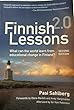 Title: Finnish Lessons 2.0
 Author(s): Pasi Sahlberg
Publisher: Teachers College Press, New York
ISBN: 0807755850, Pages: 264, Year: 2015
Search for book at Amazon.com
The relentless pursuit of a pathway to successful educational reform has spread like a virus. With international student assessments such as the Programme for International Student Assessment (PISA) conducted by the Organisation for Economic Co-operation and Development (OECD), educators and consumers of educational processes can globally compare student achievement across systems, cultures, and countries. This measure only gives a snapshot over a period of time. As a result, PISA is limited in scope and criticized in similar ways to other forms of standardized assessment. However, PISA has still become internationally relied upon as an indicator of excellence in education. These metrics have placed a heightened focus on identifying the necessary factors for delivering high-quality education. Despite increasing debate related to the measures reported through these globally administered assessments, this assessment information highlights various models of education for the world to scrutinize. As a result, you can draw conclusions about countries that are successful in this pursuit and those that are not.
In Finnish Lessons 2.0, author Pasi Sahlberg revisits the story told in the first edition, which shared insight into Finland's innovative educational solutions. They resulted in the unexpected worldwide recognition of student achievement in this Nordic country. The second edition provides updates regarding the journey of Finland's comprehensive educational reform. As a result, it includes a more current picture of the educational system in this country since it entered the spotlight for educational recognition. The book details Finland’s accolades related to student achievement. But more importantly, it also chronicles the country's ability to accomplish what other countries have found elusive to implement or even simply define: successful and systemic educational change. The new edition also includes updated statistics on international educational performance. This offers evidence of a revised vision of Finland’s academic progress and future questions regarding the country's educational journey.
The volume unravels as a logical progression that tells the story of Finland and includes three overarching sections. The initial chapters in the first section provide meaningful context to the educational, cultural, and historical influences in Finland. It also details their contribution to the educational climate that once seemed ripe for change to occur. The middle section includes a detailed description of the renewed vision of educational delivery in Finland, including the implementation of this plan beginning in the early 1970s. Within this description, Sahlberg includes both historical and current data with graphs to highlight some interesting comparisons between countries. Finally, the text closes in the final section with the author providing a summary of the distinctive characteristics of the change processes that have most contributed to the educational success of Finland and its reformed system. The final chapter includes lessons Sahlberg believes the world can learn from Finland’s story. The book challenges the current practices and dispositions that dominate many educational systems across the globe.
To begin the volume, Sahlberg references the harsh realities in Finland after the Second World War. He gives a powerful affirmation regarding the future vision that emerged in viewing education’s role as “the main vehicle of social and economic transformation” (p. 19). This singular statement appears to have given a clearly defined common purpose that served to unite the educational authorities and policy makers for decades to come in this transformational process. The intricate relationship between schools, politics, stakeholders, and the economy necessary to influence the interconnected system of education is discussed at great length. The author then describes a recently revised philosophy of education for Finland and the implementation of this vision over three phases that span several decades.
Sahlberg elaborates upon the reconceptualization of a new and comprehensive primary education system called peruskoulu. It includes fundamental changes in curriculum, guidance, counseling, upper-secondary education, the idea of diversity, and the role of special education within the system. Holistically, the author identifies three shifts that took place over three decades in Finland. The first shift encompasses an intentional rethinking of the theoretical and methodological foundations of education during the 1980s. Sahlberg describes the new pedagogical and methodological perspectives as an amalgam of diverse types of educational thought drawn from several countries and theorists, but weaved together in a uniquely Finnish way that is innovative. The second shift is an improvement of networking and self-regulation during the 1990s. Finally, the third shift includes a continuous effort to enhance the efficiency of structures and administration still in existence today.
The middle section of the book consists of a description of Finland’s revised philosophy of education that is adopted throughout the country. Sahlberg refers to this as The Finnish Paradox. He begins with the ironic tale of a country that did not intentionally aspire to be the best in global educational assessments. Instead, it quickly emerged as an educational system that leaped from "mediocre to one of the best international performers” (p. 55). The first philosophical paradox is teach less, learn more. It focuses on the concept of quality versus quantity in education. Test less, learn more is the second paradox. It describes essential differences in the role of assessment for Finland’s system. The third paradox is enhanced equity through growing diversity. It elaborates on Finland's steadfast commitment to equity for all students and to special education. Critical to this discussion is the unique description of what constitutes special education in Finland. This definition emphasizes that special education is intended for all students, not merely those with noteworthy exceptionalities. Instead, every student experiencing a difficulty in the learning process deserves a specialized education. The author highlights the interplay between a commitment to equitable education and a revised vision of special education as key contributors to the high level of achievement found in Finland's educational system.
Most noteworthy in Finnish Lessons 2.0 for first-time readers may be the sections that discuss the Global Educational Reform Movement (GERM). Sahlberg’s interesting presentation of educational reform like GERM creates a dichotomy of approaches. The Finnish Model is on one side; the pervasive, seemingly ineffective, global approach is on the other. This comparison illuminates polarized solutions such as competition instead of collaboration, standardized learning instead of personalized learning, and test-based accountability instead of trust-based responsibility. One common theme found throughout the book is having the ability to be courageous and to apply creative approaches when solving educational system problems. The author clearly makes his point that the GERM model’s solutions not only lack the results that are evident in The Finnish Model, but also directly contribute to the ongoing educational failures of other systems.
Also noteworthy in having a comprehensive picture of Finnish education is Sahlberg’s rich description of teaching as both a profession and a practice. The cultural perspective of teaching as a profession is painted as one of near reverence. In fact, it is grounded in “professional dignity, social respect, and collegiality” (p. 98). To emphasize this idea, the author writes that, “Finns continue to regard teaching as a noble, prestigious profession – akin to medicine, law, or economics – driven mainly by moral purpose, rather than by material interest, careers, or rewards” (p. 99). Equal to the importance of the country's admiration for teachers is the notion that the process of entering the teaching profession is both competitive and rigorous. This insight supports and validates the professional autonomy that teachers are granted in Finland. The book closes with an acknowledgment that the country must remain vigilant as Finnish authorities contemplate the path forward. This is due to the fact that recent international assessments "have sent worrying signals of declining student performance” (p. 191). Sahlberg claims that, “Finland has done little to improve its schools since the first PISA results were released in 2001” (p. 191). The author poses this challenge to sustain the momentum of ongoing transformation in Finland and continue to demonstrate successful achievement outcomes.
There are instances throughout the book where Sahlberg’s rendition of The Finnish Way seems like an oversimplification of the complexity of designing and delivering education, but also in the process of implementing educational change. He acknowledges in his introduction that school reform is slow and it needs to be this way to be successful. Nonetheless, Finland may have experienced the perfect storm that allowed the country to demonstrate accelerated progress in a relatively short time. However, in telling the story of Finland’s educational journey, the author accomplishes his mission of bringing “hope to all those who are worried about whether improving their educational systems is even possible” (p. 3). Readers can gain insight through the way Sahlberg provides nuance into his country’s united vision for education, its culture, and the practice of teaching. In sum, these factors give readers concrete and authentic examples of the potential for real educational change. For both educators and non-educators alike, Finnish Lessons 2.0 poses provocative ideas for reflection when contemplating the necessary inputs that contribute to educational success.
| Cite This Article as: Teachers College Record, Date Published: March 10, 2017 http://www.tcrecord.org |
JOIN SL 2.0
SUBSCRIBE TO
SCHOOL LEADERSHIP 2.0
Feedspot named School Leadership 2.0 one of the "Top 25 Educational Leadership Blogs"
"School Leadership 2.0 is the premier virtual learning community for school leaders from around the globe."
---------------------------
Our community is a subscription-based paid service ($19.95/year or only $1.99 per month for a trial membership) that will provide school leaders with outstanding resources. Learn more about membership to this service by clicking one of our links below.
Click HERE to subscribe as an individual.
Click HERE to learn about group membership (i.e., association, leadership teams)
__________________
CREATE AN EMPLOYER PROFILE AND GET JOB ALERTS AT
SCHOOLLEADERSHIPJOBS.COM
New Partnership
Mentors.net - a Professional Development Resource
Mentors.net was founded in 1995 as a professional development resource for school administrators leading new teacher induction programs. It soon evolved into a destination where both new and student teachers could reflect on their teaching experiences. Now, nearly thirty years later, Mentors.net has taken on a new direction—serving as a platform for beginning teachers, preservice educators, and
other professionals to share their insights and experiences from the early years of teaching, with a focus on integrating artificial intelligence. We invite you to contribute by sharing your experiences in the form of a journal article, story, reflection, or timely tips, especially on how you incorporate AI into your teaching
practice. Submissions may range from a 500-word personal reflection to a 2,000-word article with formal citations. Click here to explore and contribute an article.
Also, consider the exciting learning opportunity offered through the Mentors.net AI Academy.
© 2026 Created by William Brennan and Michael Keany
Powered by

